

Key takeaways
- Next‑generation chatbots are powered by multimodal, agentic LLMs and specialized domain models, moving beyond simple Q&A to autonomous, workflow‑driven virtual assistants.
- Enterprises are prioritizing secure, responsible AI with local/ hybrid hosting, multi-layer guardrails (Constitutional AI + RAG), and emotionally aware, personalized chatbots that adapt to user context.
- GreenNode’s AI platform and GPU‑optimized infrastructure (NVIDIA H100, L40S) help companies build, fine‑tune, and scale these advanced LLM chatbots with low latency, high reliability, and production‑ready MLOps.
Gartner predicts that Artificial Intelligence (AI) is on the verge of becoming a common investment to elevate customer experiences. Around 47% of businesses are preparing to integrate chatbots for customer support, while an additional 40% have plans to roll out virtual assistants.
As virtual assistants seamlessly integrate into our everyday routines and bots revolutionize internal business operations, the chatbot market is undergoing a renaissance, driven by the advancements in generative AI and Large Language Models (LLMs).
This blog aims to present the top six chatbot trends poised to shape the future. These trends serve as the essential elements for achieving unprecedented success in the age of chatbots.
Unleashing the Future of Virtual Assistants: The Chatbot Revolution of 2026
As the chatbot landscape undergoes rapid evolution, staying at the forefront of these changes is crucial. Explore these groundbreaking trends that will set you apart:
1. Advancing the Next-gen Wave: The LLM Revolution in Multimodal Chatbots
Within the realm of conversational AI, Large Language Models (LLMs) like those powering GPT, Claude, Gemini, and others, have fundamentally shifted the landscape from traditional, rule-based chatbots to sophisticated, intelligent assistants.
- Multimodality is the New Baseline: The initial challenge of accessing real-time information has been largely solved. The focus has now moved decisively to multimodality. Current cutting-edge LLMs can not only process and generate text but also seamlessly understand and create content using images, audio, and video. This enables richer, more human-like, and diverse interactions.
- The Rise of Agentic AI: We are quickly moving past simple Q&A. The successors to today's LLMs are becoming "AI Agents"—autonomous systems capable of multi-step reasoning, planning, and taking actions across various external tools and applications to achieve a user's complex goal. These agents can manage entire workflows, from booking a flight to performing data analysis.
- Specialization and Efficiency: While the large, general-purpose LLMs are impressive, the future is increasingly seeing the rise of smaller, more efficient specialized models (often referred to as Small Language Models or SLMs). These models are fine-tuned on specific, proprietary data, offering higher accuracy, reduced latency, and lower computational costs for targeted enterprise use cases.
This clear progression confirms that LLMs are not just improving chatbot responses, but are enabling entirely new forms of autonomous, context-aware digital intelligence, fundamentally reshaping the landscape of the chatbot industry.
2. Moving Beyond General LLMs: Customizing Chatbots for Specialized Domains
Consider a customer support scenario with a chatbot named "HelpDeskHero" utilizing general LLMs. These chatbots follow predetermined steps to create support cases directly from the chat, proving beneficial for basic inquiries. However, this one-size-fits-all approach may fall short of addressing the unique aspects of each customer's issue.
Post-chat, the same LLM generates a summary of the conversation to save time for both customers and support agents. Nevertheless, it lacks the nuanced understanding and context that a specialized LLM could provide.
The future holds the promise of domain-specific LLM-powered chatbots for customer support, offering tailored assistance and more effective post-chat analysis. These chatbots will also possess the capability to document cases and store them in your knowledge base when furnished with a textual summary.
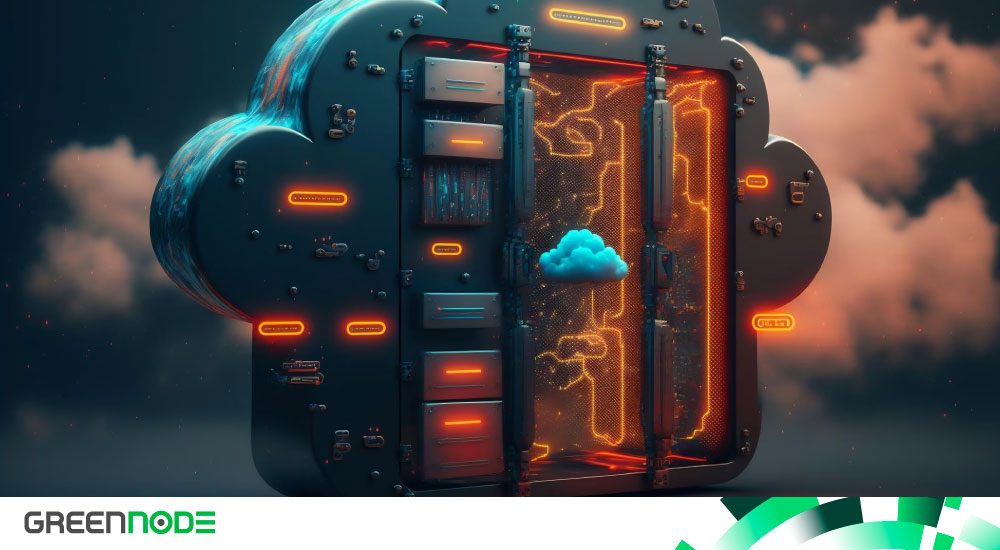
3. Safeguarding Data: The Local Hosting Revolution in Chatbots for Enhanced Security
The ascent of LLM chatbots has brought forth heightened concerns regarding data privacy, with a notable risk of data leaks associated with publicly hosted LLMs.
To counter these apprehensions, certain companies are choosing to host LLMs locally. This strategy not only bolsters data security but also ensures compliance while providing greater customization and control.
Despite potential higher costs, the inclination towards local hosting for sensitive data is anticipated to endure in the future. This trend may manifest in hybrid models that blend local and public hosting, offering a balance of flexibility and scalability.
4. Regulating Conduct: Promoting Responsible Behavior in Chatbots
The field of AI safety has moved rapidly beyond basic content filtering, recognizing that the challenge posed by manipulative inputs like the "DAN prompt" (known as a Prompt Injection or Jailbreak attack) is an architectural security problem.
The idea of an "embedded profanity layer" is now considered a primitive defense. The newest insight is the necessity of a multi-layered guardrail system and deep alignment to maintain the operational integrity of enterprise chatbots.
To prevent the transmission of offensive or inaccurate information, current best practices involve two core technological advancements: Constitutional AI and Retrieval-Augmented Generation (RAG). Constitutional AI aligns the model's behavior with a pre-defined set of ethical or legal principles during training, teaching the model to critique and correct its own outputs, thus making it inherently more resistant to being tricked.
Simultaneously, RAG systems drastically reduce hallucinations (inaccurate, fabricated responses) by grounding the LLM's answers in a verified, proprietary knowledge base, ensuring factual accuracy is prioritized over imaginative fluency.
This sophisticated approach, combining ethical self-regulation with factual grounding and defensive code architecture, is now the standard for building the secure, trustworthy AI agents of 2026.
Also read: 5 Best Embedding Models for RAG: How to Choose the Right One
5. Compassionate Chatbots: The Next Frontier in Learning, Adapting, and Delegating
Contemporary customer support chatbots have transformed into advanced tools, showcasing prowess in sentiment analysis and contextual comprehension facilitated by Natural Language Understanding (NLU).
These chatbots are adept at grasping not just the literal meaning of words but also discerning the emotions and intent behind a user's inquiry. Through the interpretation of user sentiment and context, chatbots can make informed decisions on autonomously addressing queries or, when required, appropriately delegating them to a human agent.
Furthermore, chatbots undergo constant learning and adaptation through their interactions with users, refining their responses and broadening their knowledge base. This ultimately results in a more streamlined and proficient customer service experience.
6. Customization & User Context: Crafting Tailored Interactions for Engagement
As a dedicated subscriber to a streaming platform, your love for sci-fi and action films, such as "Blade Runner" and "The Dark Knight", is well-known. Seeking a similar cinematic thrill, you engage with the platform's chatbot.
Leveraging its awareness of your movie history and genre preferences, the chatbot provides personalized recommendations. Recognizing your fondness for intricate plots and action-packed scenes, it suggests "Inception," a highly praised film by Christopher Nolan.
This degree of personalization elevates your experience, making it not only gratifying but also effortless. The chatbot's precise recommendations deepen your connection with the platform, aligning seamlessly with the evolving user expectations for personalized service.
Navigating the Future of Chatbots: Balancing Brilliance and Challenges with LLMs
The future of chatbots is unfolding at remarkable speed — powered by the rapid evolution of Large Language Models (LLMs) that bring human-like fluency and contextual understanding to digital conversations. These models have redefined what’s possible in customer engagement, support automation, and personalized communication. Yet, even with their brilliance, LLM-based chatbots still face challenges such as hallucinations, latency, and the computational demands of large-scale inference.
To bridge the gap between potential and performance, GreenNode enables enterprises to build and scale chatbot ecosystems that are not just intelligent, but also efficient, reliable, and production-ready. Moving beyond traditional infrastructure, GreenNode AI Platform offers an integrated environment where organizations can train, fine-tune, and deploy LLMs with precision and speed.
Underpinning this capability is GreenNode GPU Compute, powered by the latest NVIDIA H100 and L40S GPUs, engineered for high-throughput AI workloads. Whether you’re serving millions of chatbot interactions or fine-tuning specialized conversational agents, GreenNode’s GPU-optimized clusters deliver ultra-fast inference, low latency, and elastic scalability across every stage of the AI lifecycle.
More than infrastructure, GreenNode acts as a strategic AI partner — helping enterprises accelerate their roadmap from proof-of-concept to full-scale deployment. With its combination of cutting-edge compute power, streamlined MLOps workflows, and enterprise-grade reliability, GreenNode ensures that your LLM-driven chatbots not only think fast, but perform flawlessly.
