

The conventional wisdom about AI has been that, although computers excel in data-driven decision-making, they struggle to compete in qualitative tasks against humans. However, this notion is evolving. Rapid advancements in Natural Language Processing (NLP) tools now enable AI to assist in tasks such as writing, coding, and discipline-specific reasoning.
What is NLP (natural language processing)?
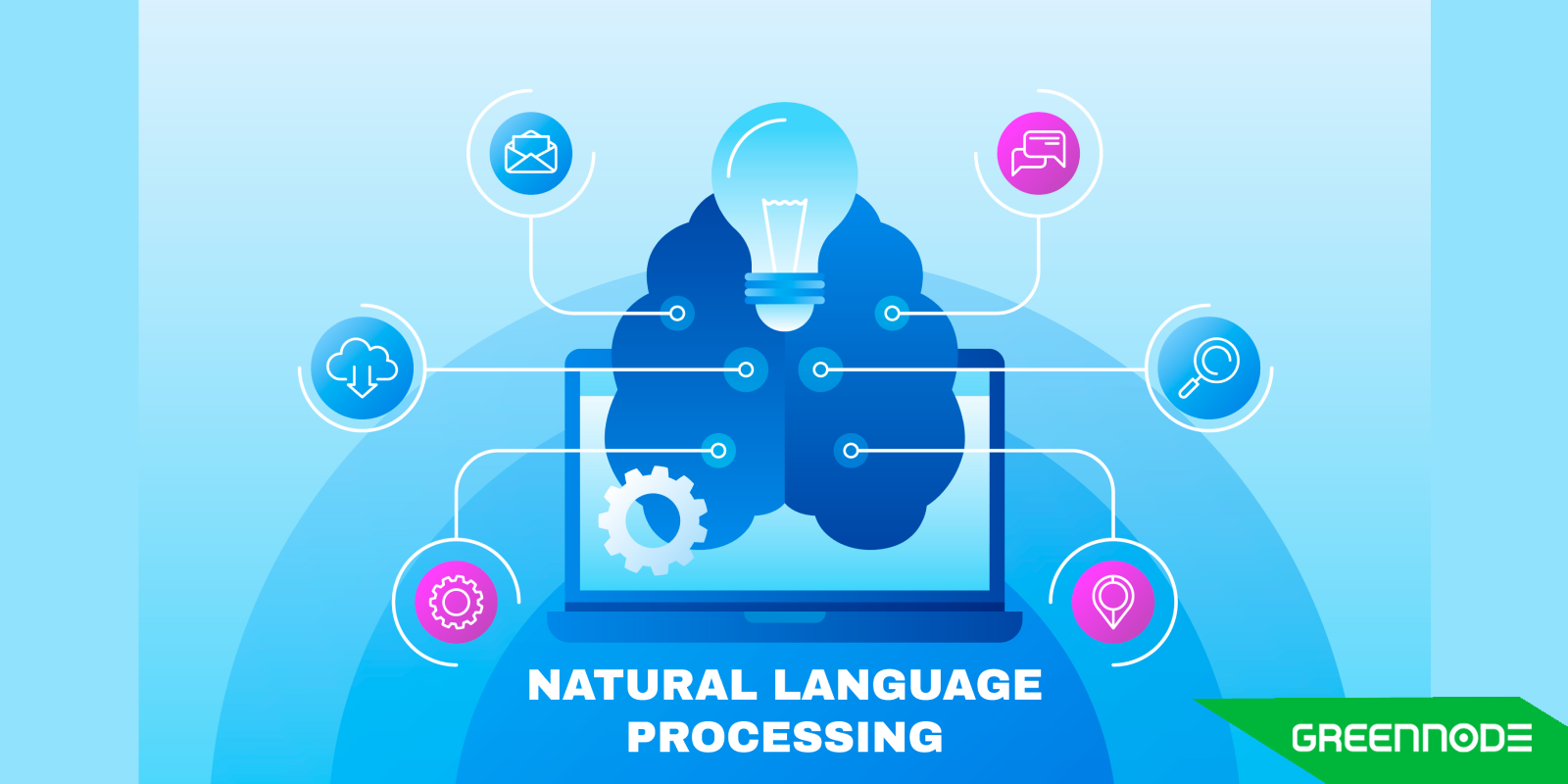
Natural Language Processing (NLP) is a field of computer science, particularly within artificial intelligence (AI), dedicated to equipping computers with the ability to comprehend text and spoken language much like humans.
NLP integrates computational linguistics, utilizing rule-based models of human language, with statistical, machine learning, and deep learning models. These combined technologies empower computers to process human language, whether in text or voice form, and grasp its complete meaning, including the speaker or writer's intent and sentiment.
The applications of NLP are diverse, ranging from language translation and responding to spoken commands to swiftly summarizing extensive volumes of text, often in real time. Chances are you've encountered NLP through voice-operated GPS systems, digital assistants, speech-to-text dictation software, and customer service chatbots, among other consumer-friendly applications. Beyond consumer use, NLP is increasingly pivotal in enterprise solutions, optimizing business operations, enhancing employee productivity, and simplifying critical business processes.
Benefits of Natural Language Processing (NLP)
Natural Language Processing (NLP) enables machines to understand and work with human language, making it one of the most impactful areas of artificial intelligence today.
Here are the five most significant benefits NLP brings to modern organizations:
- Automates Time-Consuming Language Tasks
- Elevates Customer Experience With Intelligent Interactions
- Unlocks Insights From Unstructured Text Data
- Improves Search and Knowledge Retrieval Accuracy
- Enhances Security, Compliance, and Risk Detection
Automates Time-Consuming Language Tasks
NLP eliminates manual work in tasks like document classification, email filtering, summarization, and sentiment analysis. Automation reduces operational overhead, speeds up workflows, and frees teams to focus on higher-value activities.
Elevates Customer Experience With Intelligent Interactions
AI-powered chatbots, virtual assistants, and conversational interfaces use NLP to provide instant, context-aware responses. This enhances customer satisfaction while reducing reliance on human support teams.
Unlocks Insights From Unstructured Text Data
Most enterprise data is unstructured. NLP analyzes emails, reports, conversations, and social content to extract intent, sentiment, keywords, and patterns—turning raw text into actionable insights for better decision-making.
Improves Search and Knowledge Retrieval Accuracy
NLP enhances search by understanding context rather than relying on exact keywords. This powers more accurate results in enterprise knowledge bases, documentation systems, internal portals, and RAG (Retrieval-Augmented Generation) applications.
Enhances Security, Compliance, and Risk Detection
By scanning and analyzing language-based communication, NLP helps identify sensitive information, detect anomalies, flag potential fraud, and ensure policy compliance, strengthening an organization’s overall security posture.
Challenges of Natural Language Processing
The intricacies of human language present formidable challenges in developing software that accurately interprets the intended meaning from text or voice data. Dealing with homonyms, homophones, sarcasm, idioms, metaphors, grammar exceptions, and variations in sentence structure requires programmers to teach natural language-driven applications to recognize and comprehend these complexities right from the start.
To address these challenges, various NLP tasks break down human text and voice data, aiding computers in making sense of the information. These tasks include:
- Speech recognition: Also known as speech-to-text, this task involves converting voice data into text. Speech recognition is essential for applications that respond to voice commands or answer spoken questions, though the challenge lies in the diverse ways people speak—quickly, slurring words, with varying emphasis, intonation, accents, and sometimes incorrect grammar.
- Part of speech tagging: QThis process determines the part of speech of a word or text based on its context. For instance, it identifies 'make' as a verb in 'I can make a paper plane' and as a noun in 'What make of car do you own?'
- Word sense disambiguation: This task involves selecting the meaning of a word with multiple interpretations by analyzing its context. For example, it helps distinguish between the meanings of the verb 'make' in 'make the grade' (achieve) vs. 'make a bet' (place).
- Named entity recognition (NER): Identifying words or phrases as entities, such as recognizing 'Kentucky' as a location or 'Fred' as a person's name.
- Co-reference resolution: This task involves identifying whether two words refer to the same entity, such as determining that 'she' refers to 'Mary' or identifying metaphors and idioms in the text.
- Sentiment analysis: Attempting to extract subjective qualities - attitudes, emotions, sarcasm, confusion, suspicion - from text.
- Natural language generation (NLG): Described as the opposite of speech recognition, NLG involves converting structured information into human language.
Explore Top NLP Tools and Strategies
Python and the Natural Language Toolkit (NLTK)
Python, a programming language, offers an extensive toolkit for tackling specific NLP tasks. Within Python, the Natural Language Toolkit (NLTK) stands out as an open-source repository comprising libraries, programs, and educational resources, facilitating the development of NLP programs.
NLTK includes libraries for various NLP tasks, along with subtasks like sentence parsing, word segmentation, stemming, lemmatization (trimming words to their roots), and tokenization (breaking text into tokens for better comprehension). Moreover, it provides libraries for implementing advanced capabilities such as semantic reasoning, enabling logical conclusions based on extracted facts from text.
Statistical NLP, Machine Learning, and Deep Learning
In the early stages, NLP applications relied on hand-coded, rules-based systems proficient in specific tasks but challenging to scale due to constant exceptions and growing volumes of text and voice data.
Statistical NLP emerged as a solution, blending computer algorithms with machine learning and deep learning models. This fusion automatically extracts, classifies, and labels elements in text and voice data, assigning statistical likelihood to potential meanings. Presently, deep learning models, incorporating convolutional neural networks (CNNs) and recurrent neural networks (RNNs), empower NLP systems to learn dynamically, extracting more accurate meaning from extensive, unstructured, and unlabeled text and voice datasets.
NLP Use Cases: What are Applications of NLP?
Natural language processing serves as the backbone of machine intelligence in various contemporary real-world scenarios. Below are few notable use cases of NLP:
Machine Translation
Google Translate exemplifies the widespread application of NLP. Effective machine translation goes beyond simple word replacement, aiming to accurately capture the meaning and tone of the input language while delivering text with the same intent and impact in the output language. Modern machine translation tools exhibit notable progress in accuracy, addressing challenges in translating language effectively.
Virtual Agents and Chatbots
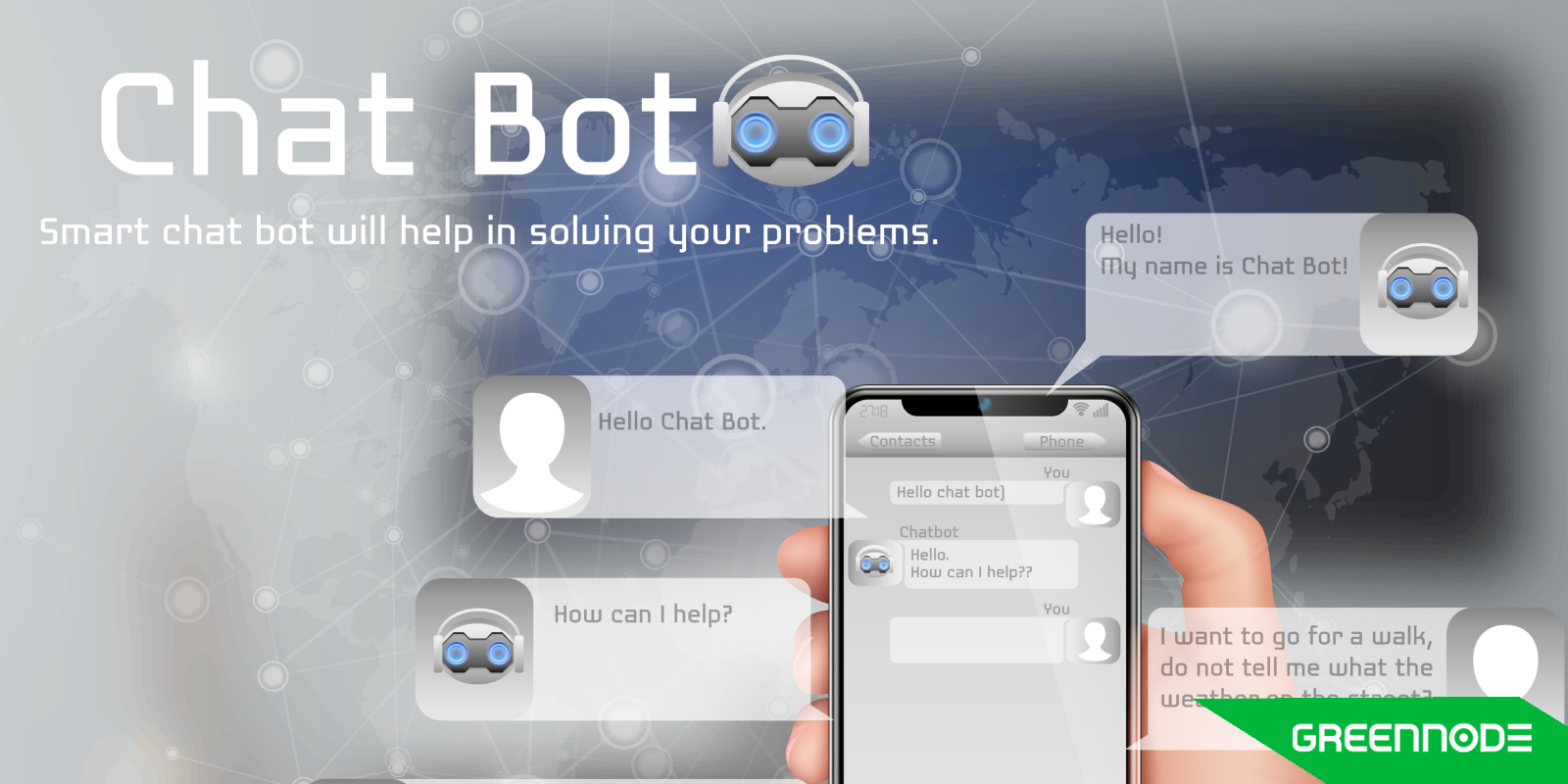
Virtual agents like Apple's Siri and Amazon's Alexa utilize speech recognition to understand voice commands, while natural language generation enables them to respond appropriately. Chatbots perform similar tasks in response to typed text. The best of these systems learn from contextual cues in human requests, providing improved responses over time. The next frontier for these applications involves question answering - responding to questions with relevant and helpful answers in their own words.
Social Media Sentiment Analysis
NLP has evolved into a vital tool for extracting hidden insights from social media channels. Sentiment analysis examines language in social media posts, responses, reviews, and more to discern attitudes and emotions toward products, promotions, and events. Businesses leverage this information for product designs, advertising campaigns, and strategic decision-making.
Text Summarization
Text summarization, powered by NLP techniques, processes extensive volumes of digital text to generate summaries for indexes, research databases, or time-pressed readers. Leading text summarization applications incorporate semantic reasoning and natural language generation (NLG) to provide context and conclusions, enhancing the usefulness of the summaries.
Spam Detection
While spam detection may not immediately come to mind as an NLP solution, leading technologies leverage NLP's text classification capabilities to scrutinize emails for language patterns indicative of spam or phishing. This includes identifying financial jargon overuse, characteristic poor grammar, threatening language, inappropriate urgency, misspelled company names, and more. Spam detection is considered 'mostly solved' by experts, though individual experiences may vary.
Natural Language Processing in the cloud
Natural Language Processing stands as a transformative force, bridging the gap between human language and computational capabilities. As a branch of artificial intelligence, NLP empowers machines not only to comprehend text and spoken words but to grasp the nuances, context, and emotions embedded within. The journey of NLP has seen remarkable advancements, from rule-based models to the integration of statistical, machine learning, and deep learning models.
Deploying NLP on the cloud offers numerous benefits, including scalability, cost savings, global accessibility, security, and the ability to leverage a broad range of cloud services for enhanced functionality. These advantages make cloud computing an attractive platform for organizations looking to harness the full potential of NLP applications.
As we navigate the intricate landscape of language, NLP and cloud computing emerge as a fundamental tool and platform, not just in understanding words but in unraveling the nuances of human expression.
