

What matters
- Autonomy and control aren't mutually exclusive - AgentBase's "governed autonomy" model lets agents keep decision-making freedom while every action stays observable and stoppable, rather than trading independence for safety.
- The control architecture rests on four layers: Gateway (validates requests against schema/policy before API access), RBAC (restricts which APIs a given agent can call), Insight (continuous audit logging of every API call), and Budget Alerts (real-time cost monitoring to catch runaway agent loops).
- The core stance is "build slowly, build right", every agent is a potential attack surface, so governance needs to be architected in from project inception, not retrofitted afterward.
If you're weighing whether to let an agent take over part of your ops workflow, you've probably hit this question already: how much decision-making should the agent actually get? "Build slowly, build right. Every agent is a potential attack surface" — that's the principle a lot of platform/ops teams are working from these days, and it's not overly cautious. An agent that can call APIs on its own, process data, and decide its next move is also a point where, if something goes wrong, the blast radius isn't a single failed request.
The trouble is that a lot of teams treat "autonomous agent" and "controllable" as opposites. More automation means less control, tighter control means the agent can barely operate on its own. GreenNode AgentBase takes a different approach: no trade-off — the agent works autonomously inside a framework that's controlled at every step.
What governed autonomy actually means
Governed autonomy isn't about dialing back an agent's autonomy in exchange for safety. The agent still picks up tasks, decides how to handle them, and calls the APIs it needs without a human approving every step. The difference is that every action the agent takes passes through a layer that can be observed and intervened on — instead of the agent running as a black box.
Put another way, the agent gets full freedom to act within a clearly defined scope, and your platform/ops team can always look inside to see what it's doing, why it's doing it, and shut it down immediately if needed.
Where a task actually goes
To see governed autonomy in practice, picture a concrete task: an agent picks up a request to process an order, needs to call a few internal APIs, and has to save its processing state.
That task doesn't go straight from the agent to the target system. It goes through Gateway first, where the request is validated against a schema and checked against policy before it's forwarded. If the agent wants to call a given API, Gateway checks whether that's actually something the agent is allowed to do before the request ever touches the internal system.
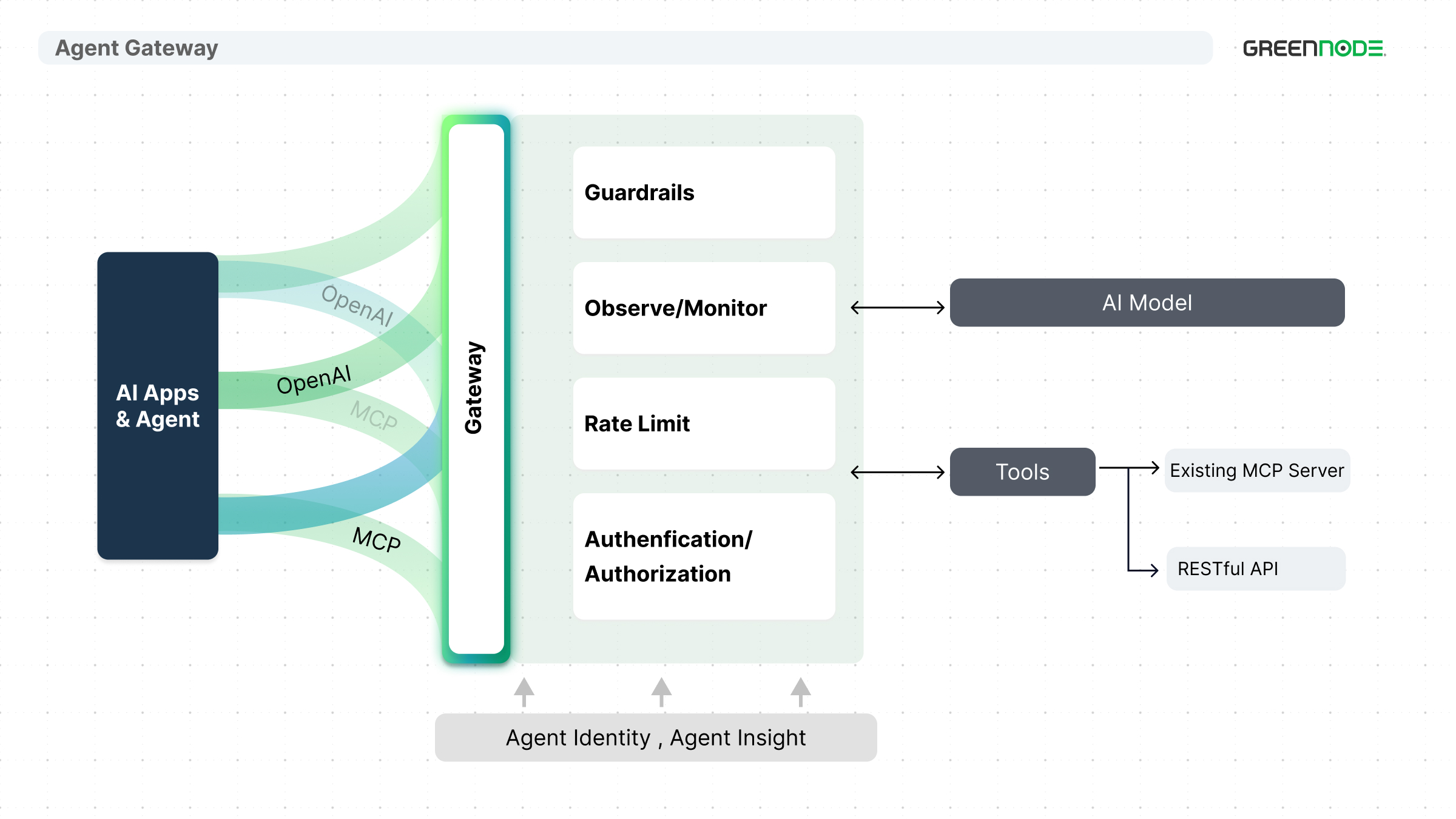
People also read: Block Sensitive Data Before It Reaches Model-as-a-Service with Envoy AI Gateway
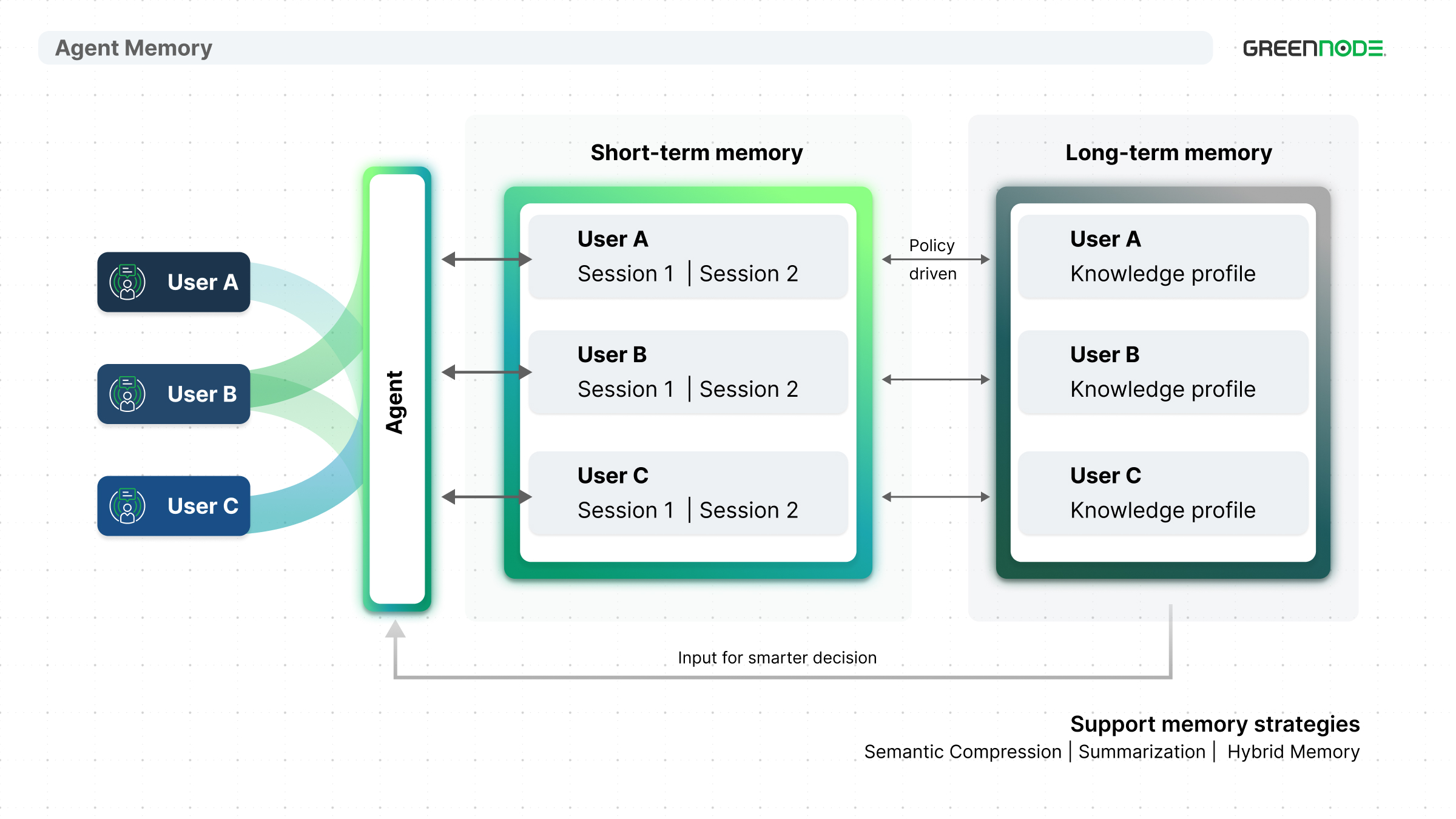
The task's processing state gets saved to Memory, so the agent — or another agent further along the same workflow — can pick up exactly where things left off instead of losing context midway. The actual logic, if it needs to run dynamic code, executes inside Code Interpreter, a separate execution environment rather than something running alongside production systems.
And through all of it, Insight logs every step: what API the agent called, when, what came back, how long it took. Not scattered logs where every service writes its own format, but one continuous trace that follows the exact path the task took.
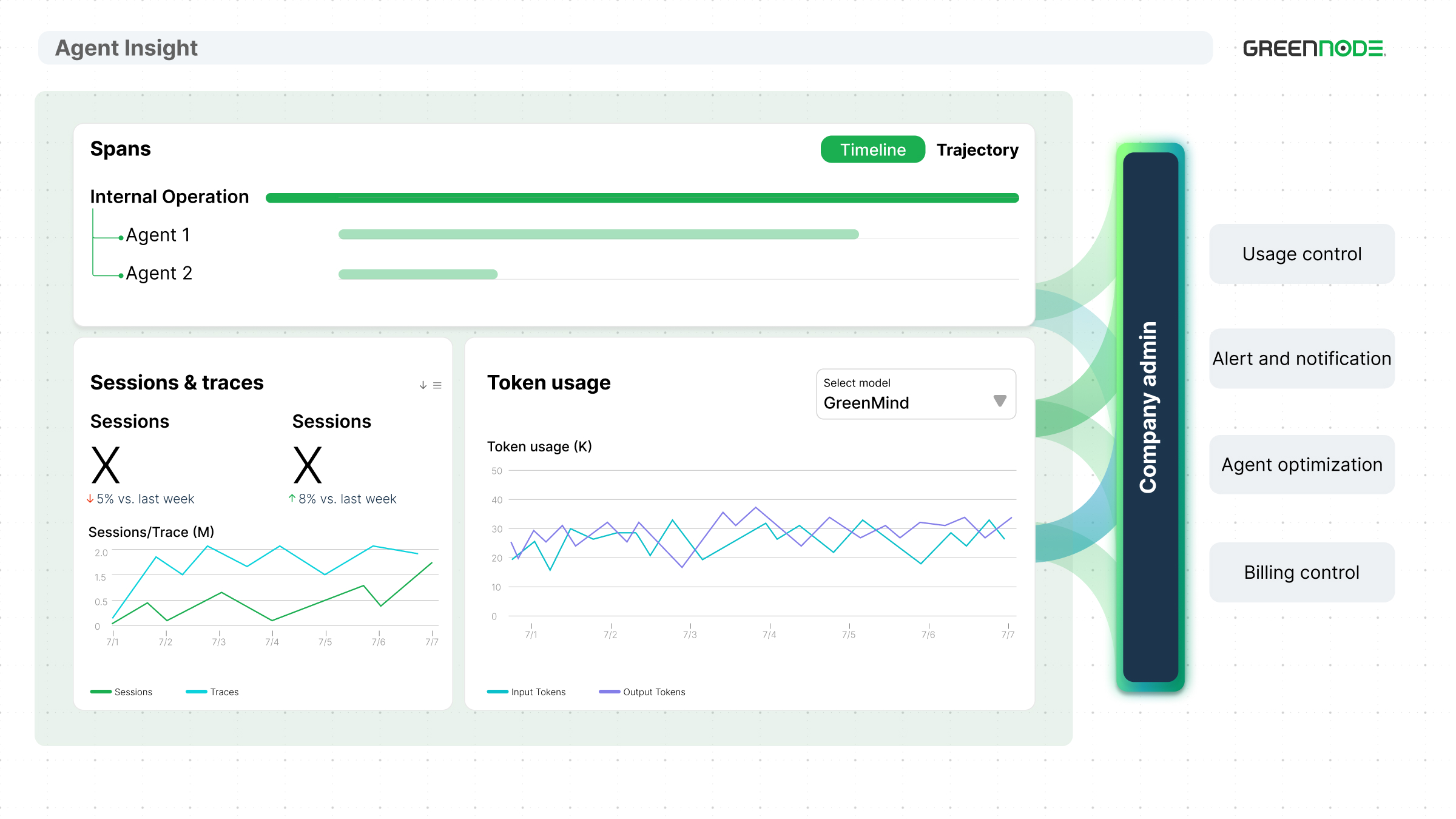
This is really the core of an agent workflow guardrail: the guardrail isn't about blocking what the agent does, it's about every action passing through a path that can actually be inspected.
Four concrete control points
A governed autonomous agent isn't an abstract concept — it comes down to four concrete control points, built directly into the workflow above rather than bolted on as a separate check afterward.
First is schema validation at the Gateway. Every request the agent sends has to match a predefined schema, so it can't send an unexpected payload the target system wasn't built to handle.
Second is RBAC scoping which APIs the agent can call. An agent processing orders has no reason to be able to call a user-management API. Permissions are assigned per agent role, and Access Control enforces that on every single call — it doesn't rely on the agent "knowing its own limits."
Third is Insight alerting on unusual agent behavior — an unfamiliar API call, a sudden spike in request frequency, or a behavior pattern that doesn't match the norm. This is the early-warning layer, letting your platform/ops team catch a problem before it turns into a real incident.
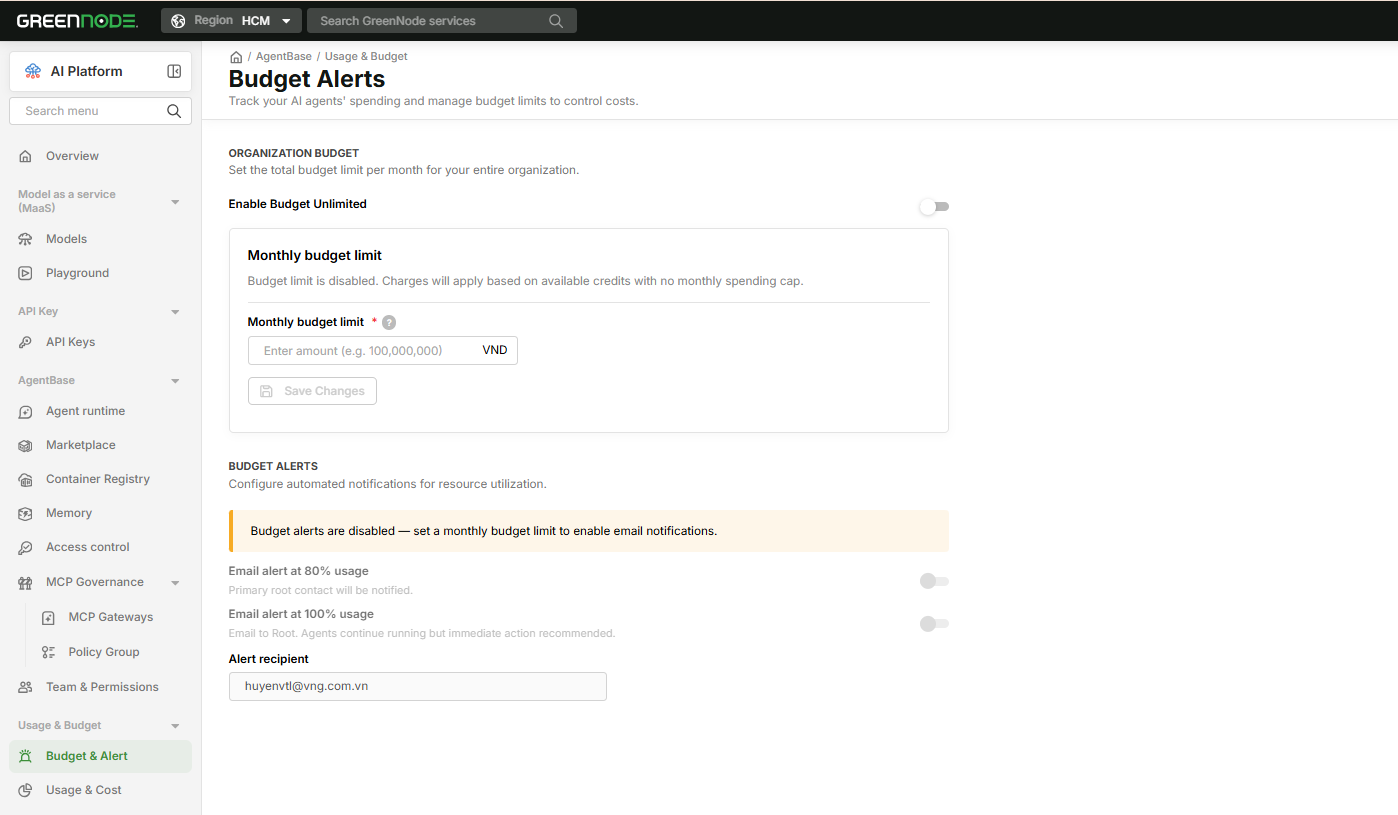
Fourth is budget alerting when cost looks off. An agent running continuously and unattended can just as easily be an agent quietly burning through budget — an unexpected loop, or calling a model far more often than intended. Real-time cost alerts catch this before it shows up as a surprise on the invoice.
Every control layer has somewhere to be seen
Those four control layers are close to useless if the team has no clear place to watch and manage them. On AgentBase, each layer sits in its own screen instead of being crammed into one: the Agent runtime screen to see what's running and stop an agent when needed, Access control to manage RBAC permissions per agent, MCP Governance to track and adjust policy at the Gateway, and Usage & Budget to watch cost alerts in real time.
Keeping these separate doesn't mean fragmented — your platform/ops team still gets the full picture, it's just that each piece of information lives where it actually belongs, instead of everything getting funneled into one combined dashboard. Marketplace plays a different role entirely: it's where you find and quickly deploy ready-made agents like OpenClaw, with a single 1-click deploy, not where you monitor agents that are already running.
Autonomous doesn't mean out of control
Agents on AgentBase are genuinely autonomous — they pick up tasks, decide how to handle them, and run without a human approving every step. But "autonomous" here doesn't mean operating outside of view. Every action passes through Gateway, gets scoped by RBAC, gets tracked by Insight, and has its cost watched in real time — each with its own screen your platform/ops team can check whenever they need to.
That's why "build slowly, build right" isn't at odds with letting agents automate your work. Building it right from the start means building it on a system where the agent's autonomy always comes with a way for people to stay in control — not a trade-off between the two.
Want to try governed autonomy on your own team's agents? Start building and deploying on AgentBase — Gateway, RBAC, Insight, and Budget Alert are all there from day one, so you don't have to build a separate control layer yourself.
